

Grace Descending

Red-tailed hawks nest in our Goose Creek valley in the summers, and we hear them so frequently overhead that sometimes we don’t even bother to look up. But on a recent summer day, had I allowed that shrill and ordinary call to go unacknowledged, I would have missed a most extraordinary performance in a biology watcher’s lifetime.
ExTRA: You can listen to a slightly different version of this, as it was broadcast as a three minute essay on WVTF, Roanoke’s NPR station, in 2006.
Turn on headphone or sound and click here.
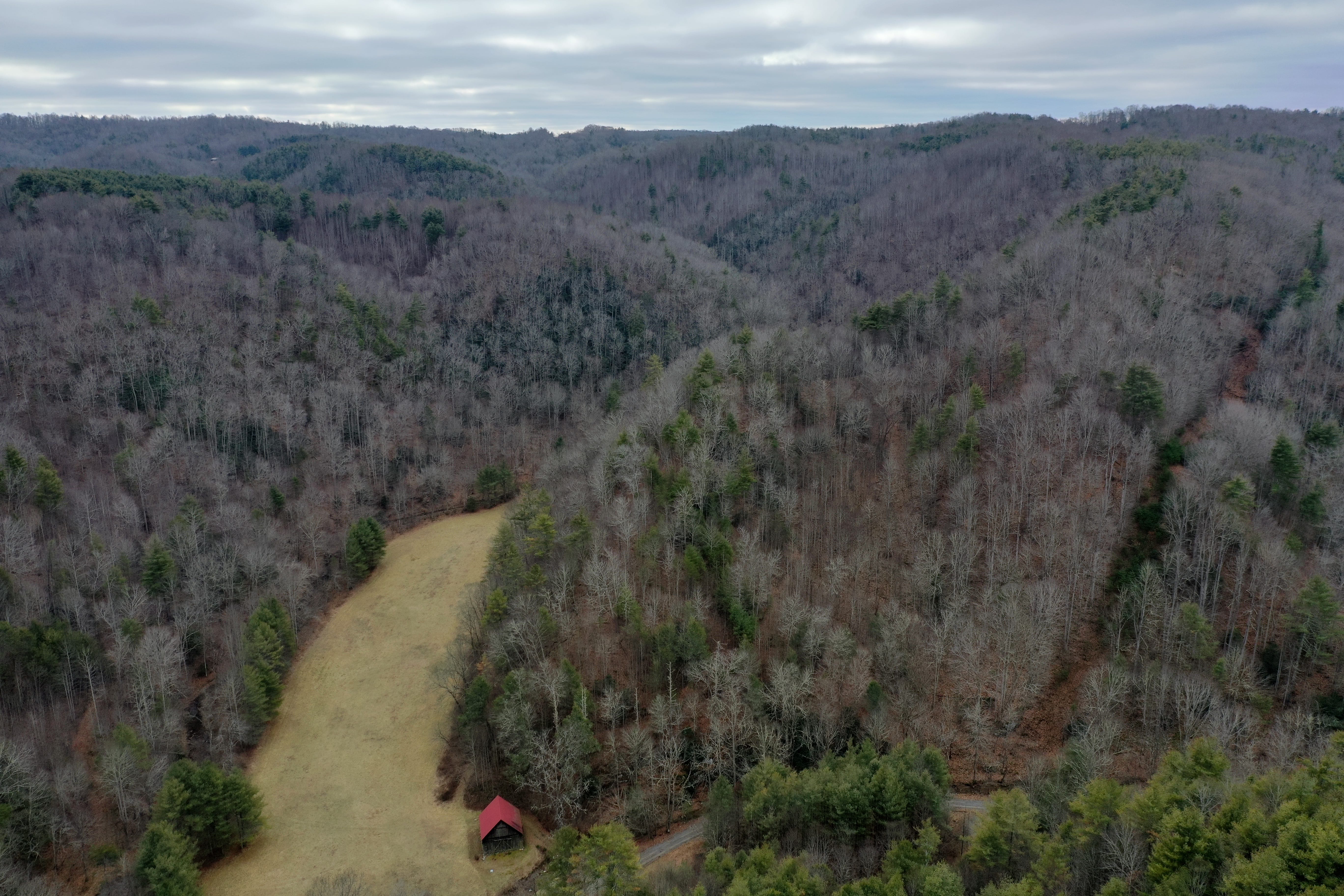
High up against white cumulus, a pair of red-tails rode the thermals above the rocky tailbone of the ridge where it comes down to meet the creek. One bird traced a wide path four hundred feet above the top of the Hemlocks; the other, a hundred or more above. They circled together in opposite directions in a single rising kettle of warm air, aware of each other—probably male and female.
The lower bird called its rasping tee-DEEER! and as if in response, the higher bird tucked its wings tight against its body and plummeted straight for the tallest White Pines along the spine of the ridge. He pulled out nonchalantly at the last instant, to climb the warm air again and soar in lazy spirals above his partner.
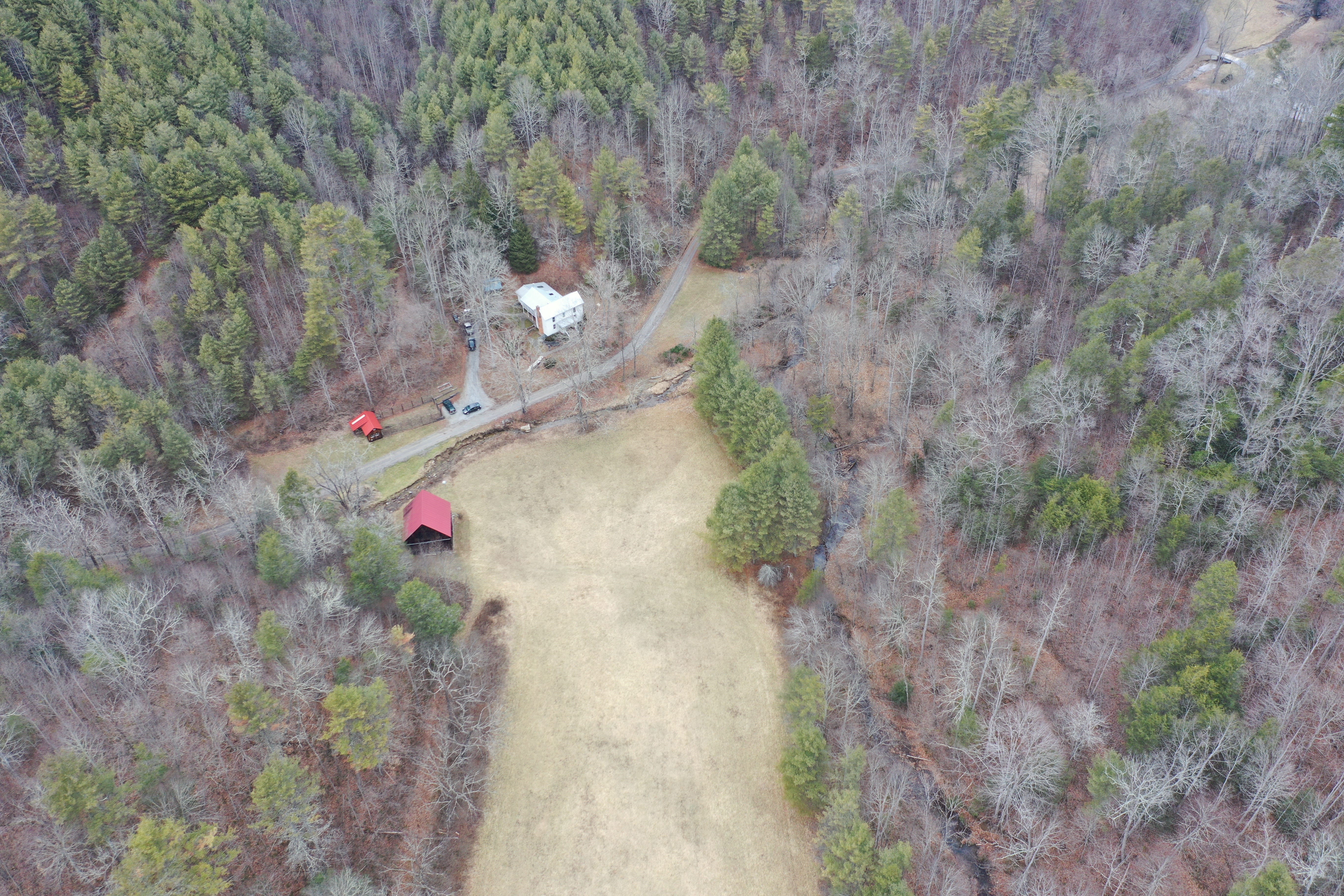
I’ve watched red tails perform this power dive before, and it always thrills me. For that moment, I become the bird I’m watching, I see what it sees and feel what it feels, falling. My head swims as I pull out of the dive, climbing once more, to look down on the tiny white house where the man stands looking up, shading his eyes with his hand.
But that man had never witnessed the display that followed moments later. The two raptors flew circles together in close formation in an ordinary kind of way, when the one pulled away alone and soared to a much higher berth.
And then, from that great height, the raptor tucked his wings. His silhouette against bright cloud became the shape of a wingless fuselage of a falling missile, a feathered arrow. The trajectory anticipated the arc of his partner along her slow circle.
At the very last instant as I was about to believe I was witnessing an attack, the perfect line of the free-falling bird veered just enough to miss his target. The nearness of the pass pulled his victim sideways into the turbulent undercurrent of the dive. And at that instant, he unfurled his wings full, breaking his descent, and he rose just enough that the two birds were suddenly side by side. And they embraced.
Talon in talon, wings wide and fixed, they fell—yet not a fall, but a dance, a sacrament each bird for and with the other. A russet, feathered carousel twirled with the smooth choreography of a maple fruit in slow motion in a giddy centripetal act of play— or thanksgiving.
Round and round through the buoyant air, their outstretched wings traced circles in space and they held to each other for life, for joy, in graceful descent. At the last moment, they parted as if nothing out of the ordinary had happened, and resumed their silent scribes in the kettle of warm air above the ridge.
Was this performance practiced or spontaneous? Was it a ritual, fixed by instinct or a creative and cooperative act of will? My inner poet even considered for the briefest moment that perhaps these two birds chose to offer this aerial ballet there and then because I had acknowledged their presence by looking up, and I had been an honored and appreciative audience of one.
I know better, of course. But having seen this, I will be more inclined to expect small, personal miracles of beauty in the years that remain. And I will ponder the likelihood that we create these revelations simply by being expectant and receptive and ready to witness them in the ordinary of our busy lives.
I am pretty sure I remember reading this on the original publication date. What an amazing experience.
The aerial view of your homestead made me so homesick because I really, really enjoyed all your photos taken at ground level of all those loved locations.
Wow, just wow!