

I Feel the Earth Move
Feel the Tilt? Lean into it.

Spring has come overnight. And I must remember this for the hope that if a soul can survive through February, there is reward at hand. Hold that in your mind, should another March come to pass. Wait for it.
A few days lately I have suited up against the wind and, when I got as far as I could stand to go, I gave serious consideration to walking backwards against an unrelenting gale from the north to avoid the abrasion.
But the exposure has been worth any whining and grousing that bitter cold might have caused, with only me and a gaggle of Canada geese to hear. I feel lighter; younger; free-er under SKY. I need to get outside every day, no matter the weather.
INTO THE LANDSCAPE
The images below are from a natural area north of here which was new to me (as almost all Missouri natural areas are) where the geological history is good to know (if not fully comprehended by me.) My source is reliable but the reporting thereof, perhaps not so very much. I was part of a small excursion to this destination just a few days ago.
The area we visited is not large in acreage but is vastly unique in topography and history. The terrain of the deepest rock tells that there was a river valley (300 odd million years ago) that filled with sediment, leaving behind a mostly sandstone river bed. Compressed by time and eroded over the millenia, we find today’s sculpted low-canyon walls that seep moisture to resident bryophytes and pterophytes (and so much more flowering life will become visible there in coming weeks.)
When the surrounding landscape was dominated by grassland prairie, this old river valley was an oasis of rich hardwood diversity—good for hunting and shelter—as evidenced by petroglyphs still visible but fading as the sandstone, grain by grain, is worn away by wind, water and time.
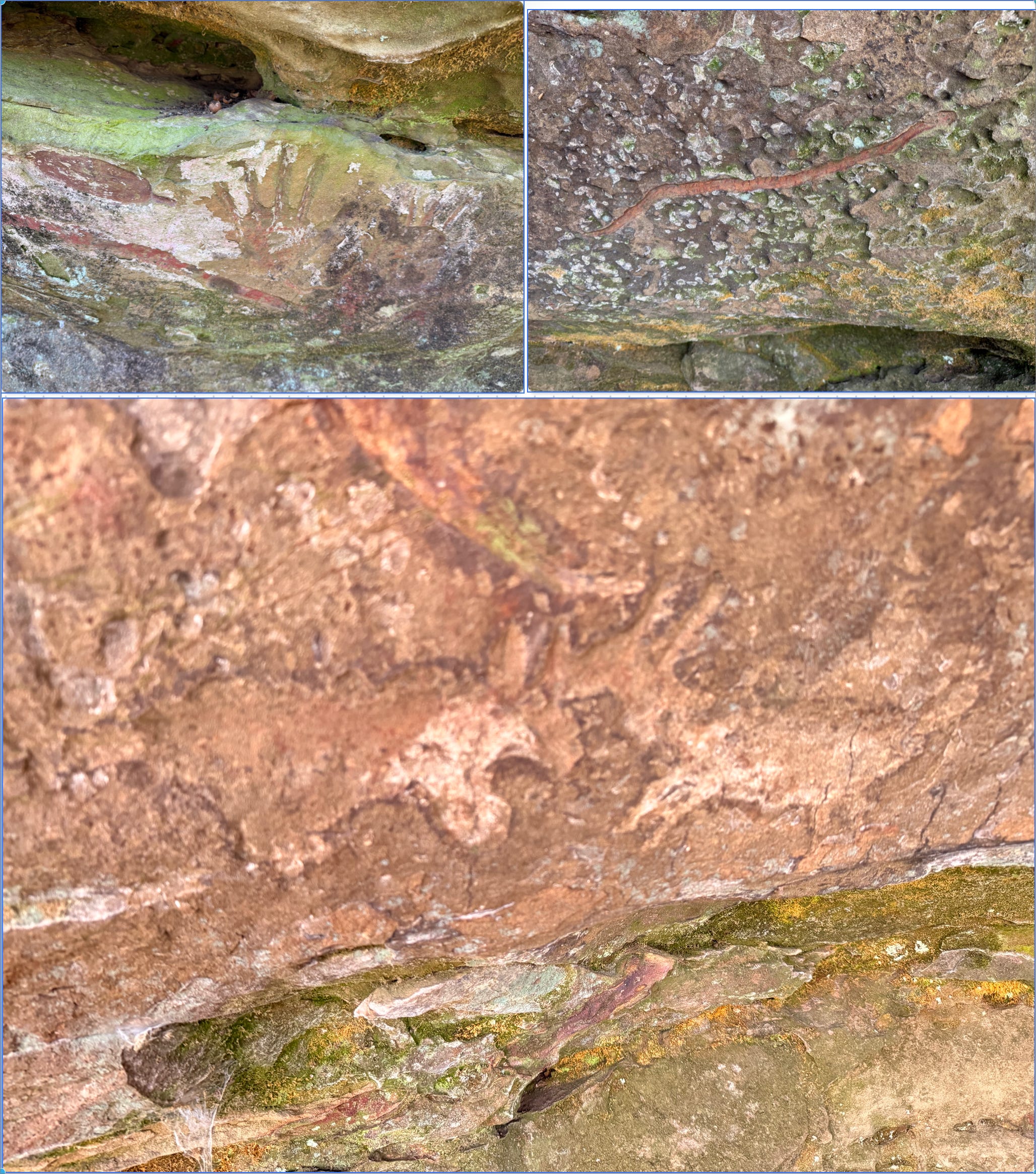
Above left: handprints Above right: snake Bottom: hooved animals
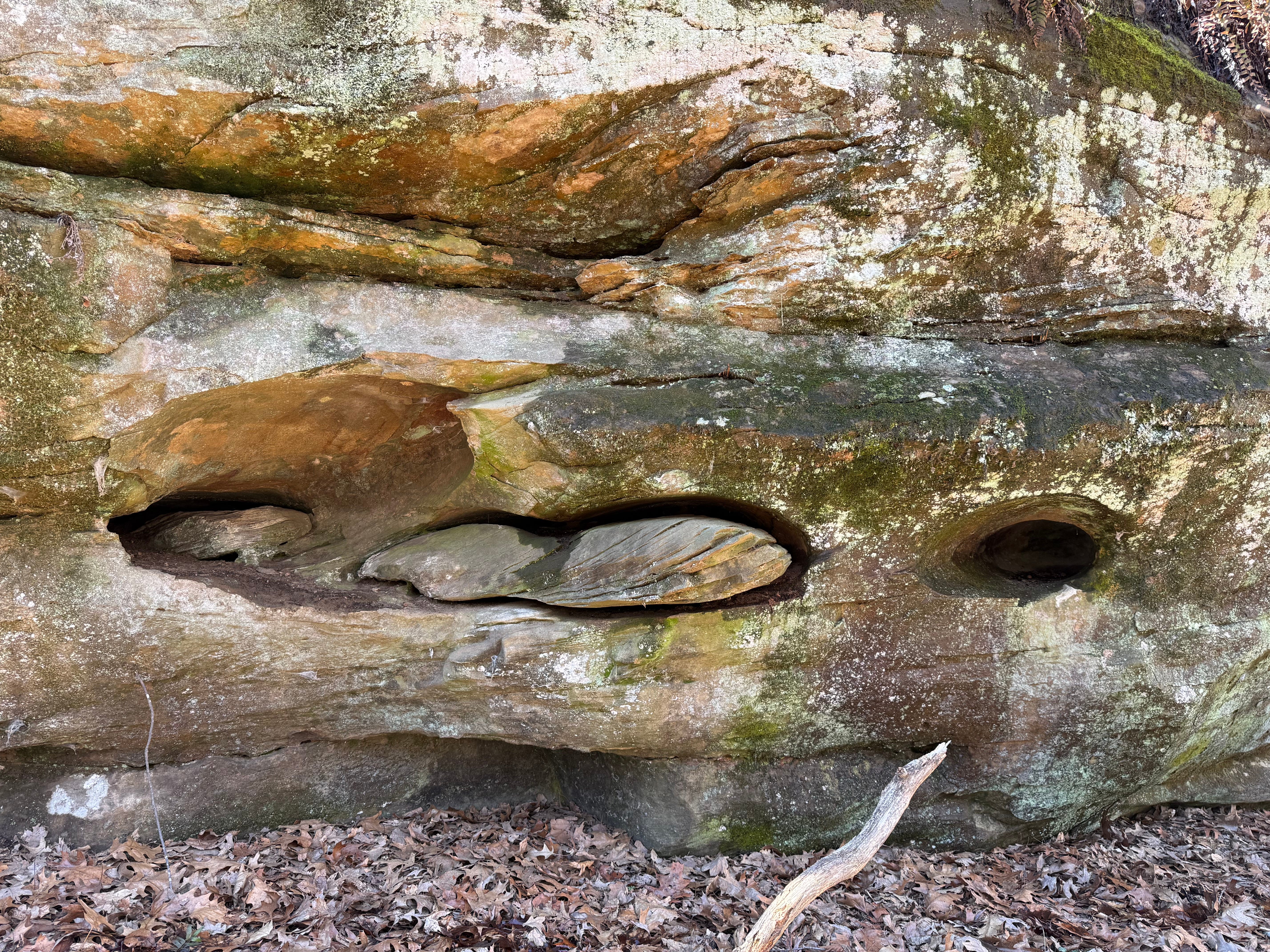
Old river bottom sediments showing inclusions and channels. Some of the smooth-walled “chambers” where much larger than this one, and extended a dozen or more feet into the walls of the ravine. Several of the larger ones would have been a good place for ancient hunters to shelter and rest out of the wind and rain.
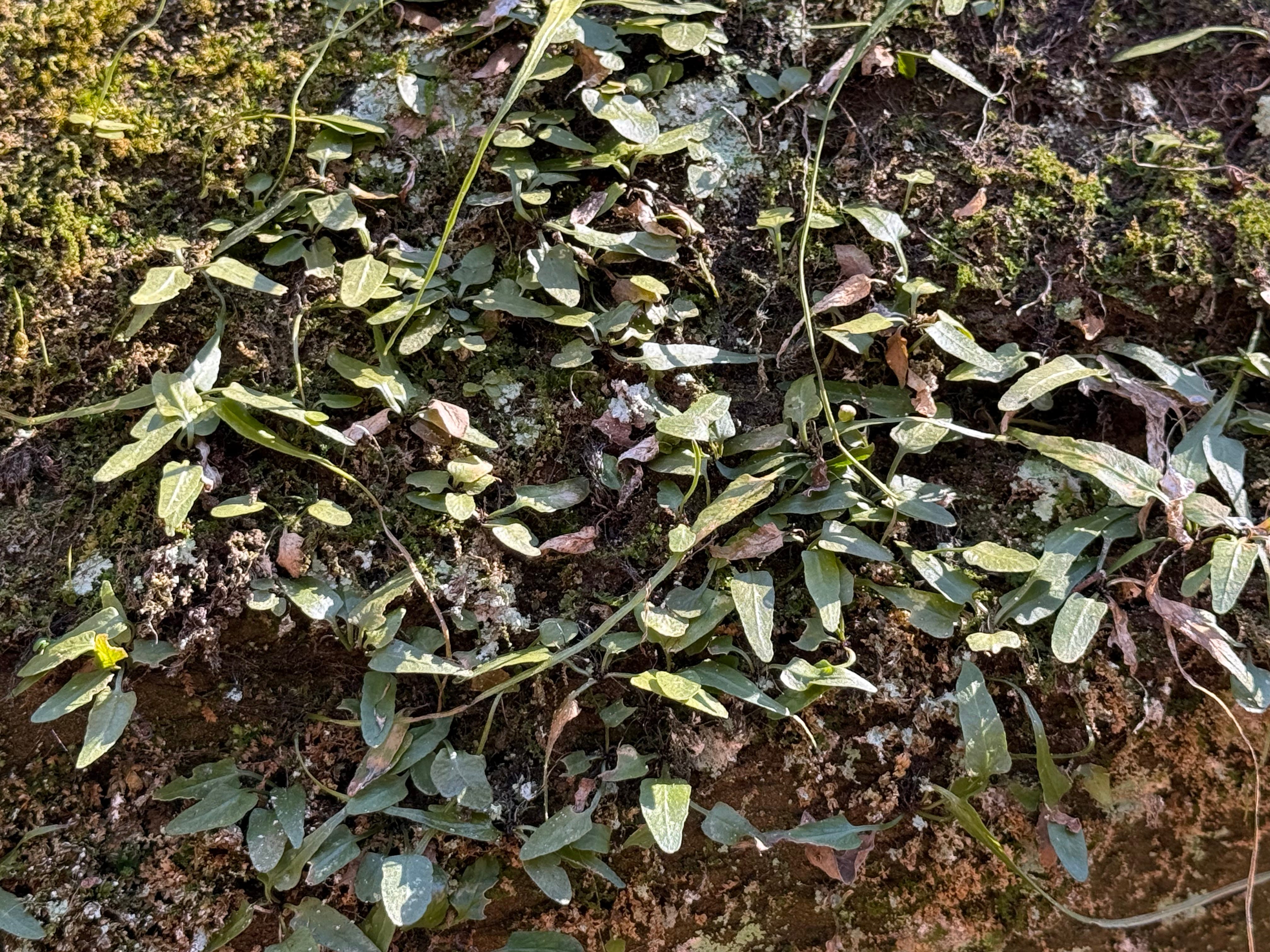
I would have expected a lot of Rock Cap Fern in this setting but managed to miss it if it was there. The fern above is commonly called “walking fern” for its propagation by rooting at the tips of the long tapered “fronds.” I usually associate this with alkaline soil and rock like limestone.
The stone in the canyons for this visit were marbeled with iron and other minerals, which is no great surprise from rock formed by ground-up mountains from the interior of the ancient moving and heaving continental masses.
AND A SIDE TRIP SAME DAY
We had a picnic lunch at Union Covered Bridge that crosses the Elk Fork of the Saline River. And I learned a lot about salt springs that were common in the area. As modern farming demaned massive amounts of groundwater, the old springs dried up, chaning the landscape and the way people lived together on the land. The prairie is gone, and there is not much to see but vast flat fields. Things have changed.
There is the matter of scale as farming has become mechanized: then—twenty close-knit farming families with adjoining 100 acre farms; today— two 1000 acre farms managed by two families far apart. The post-glacial landscape is flat and managed efficiently but would be hard for me to love. Meanwhile…
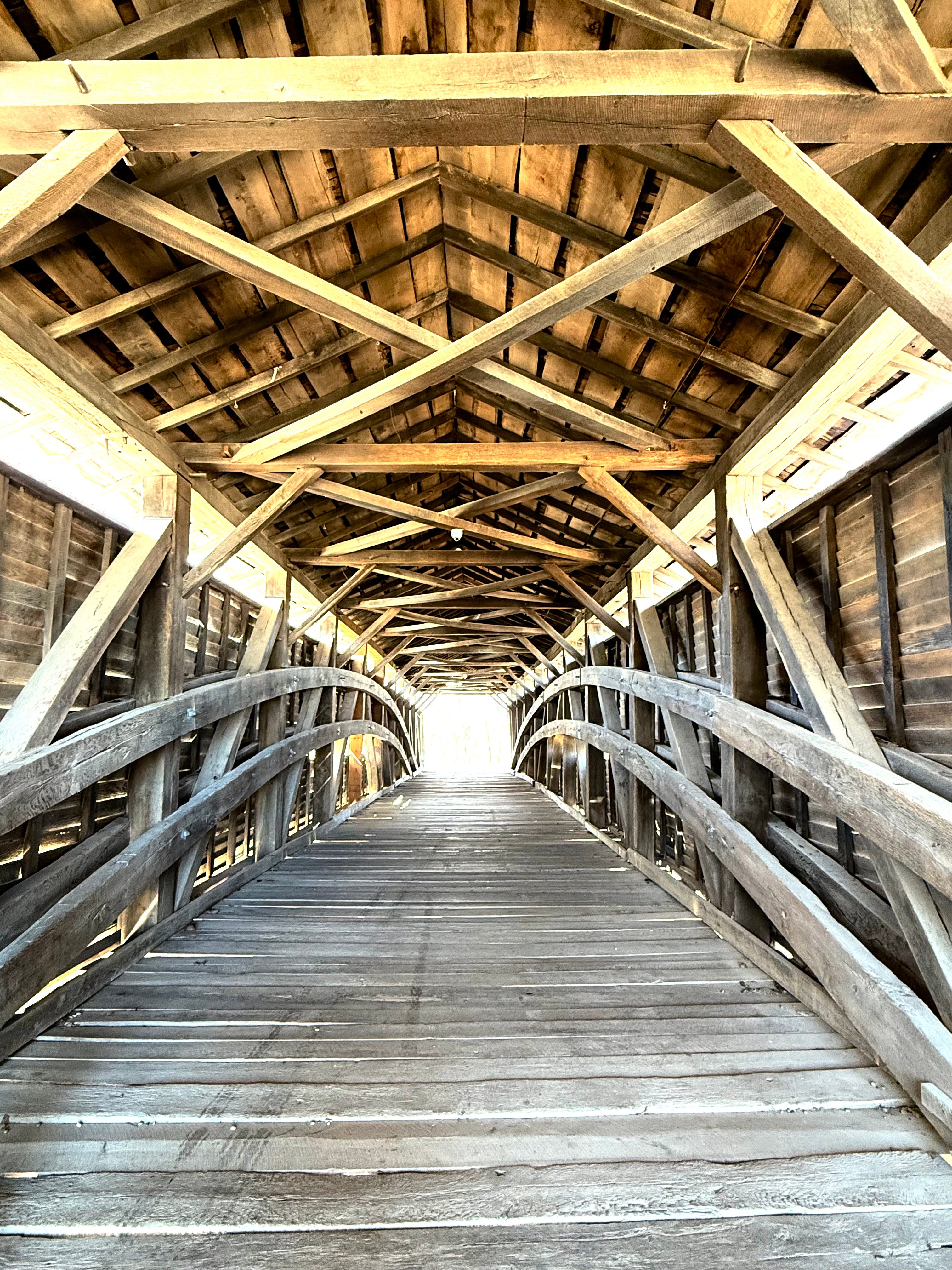
The timbers in the structure were impressive, as was the joinery (Burr Arch truss system.) The form of it was a thing of beauty—a creation of human imagination and engineering.
As the day’s excursion ended, we went to this location below (several thousand acres of a conservation-restored old surface coal mining operation) hoping to observe woodcocks in their courtship performance but only got fleeting glimpses of a couple of dark shapes against the sky as the sun settled beyond the horizon.
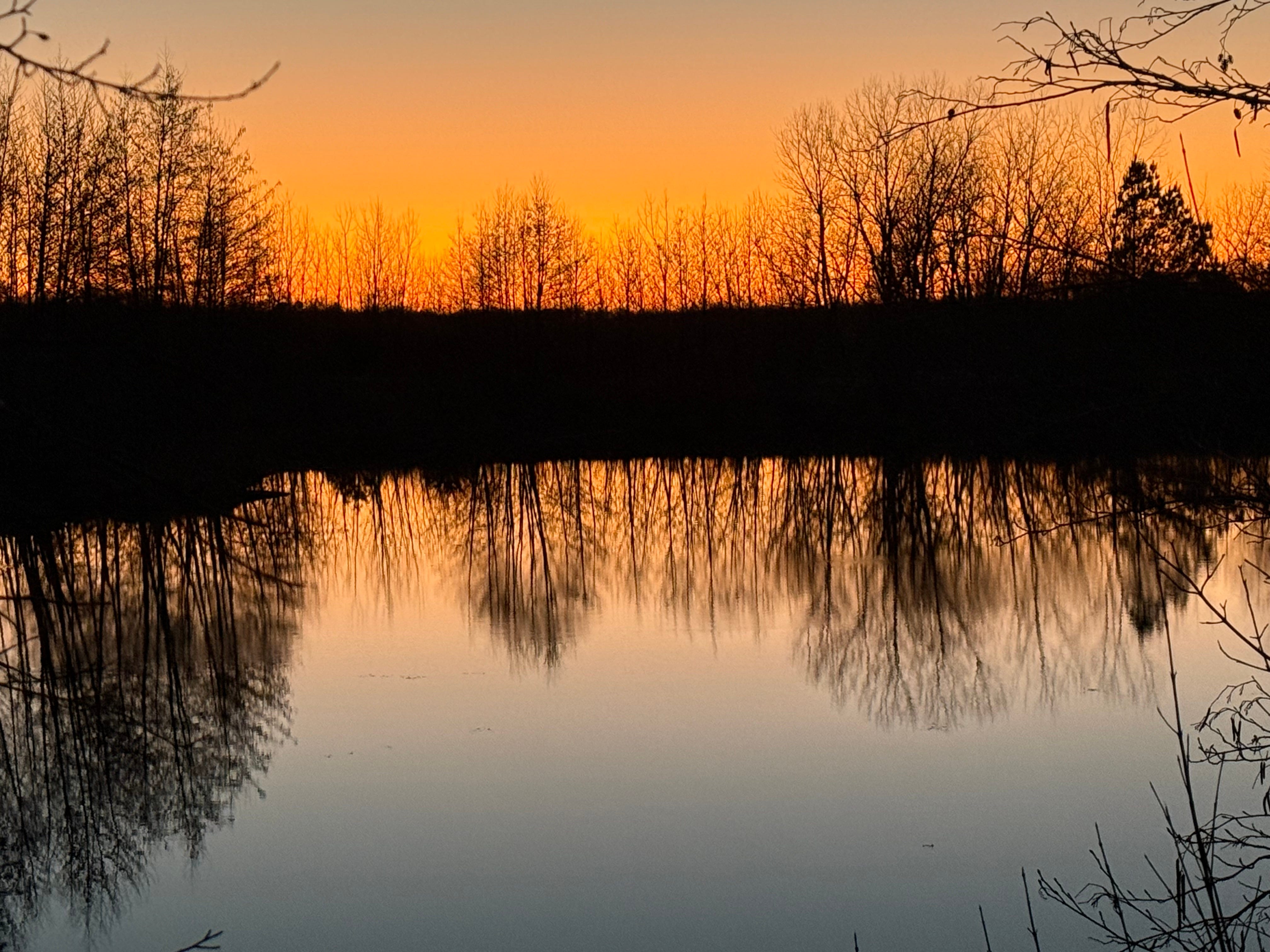
I am hopeful for the possibilities of my first free-to-roam spring ahead in Missouri. There are so many miles of trails nearby to explore on my own, and with the help of my friends who know the place well—like I used know southwest Virginia. I am still a stranger here but getting to know HERE better, and finding a lot to love.
Thanks for the photos. I have gone on several woodcock walks with thel ocal bird club but only managed to hear there mating cry as they flew up and down in the evening sky.
We went to a nearby state park here in Richmond a couple of weekends ago and saw about 20 woodcocks, including several who failed to come straight down and landed right on the path, just several feet from us.