

Picture This! Perambulations Late May
And yet another SPRING under my belt

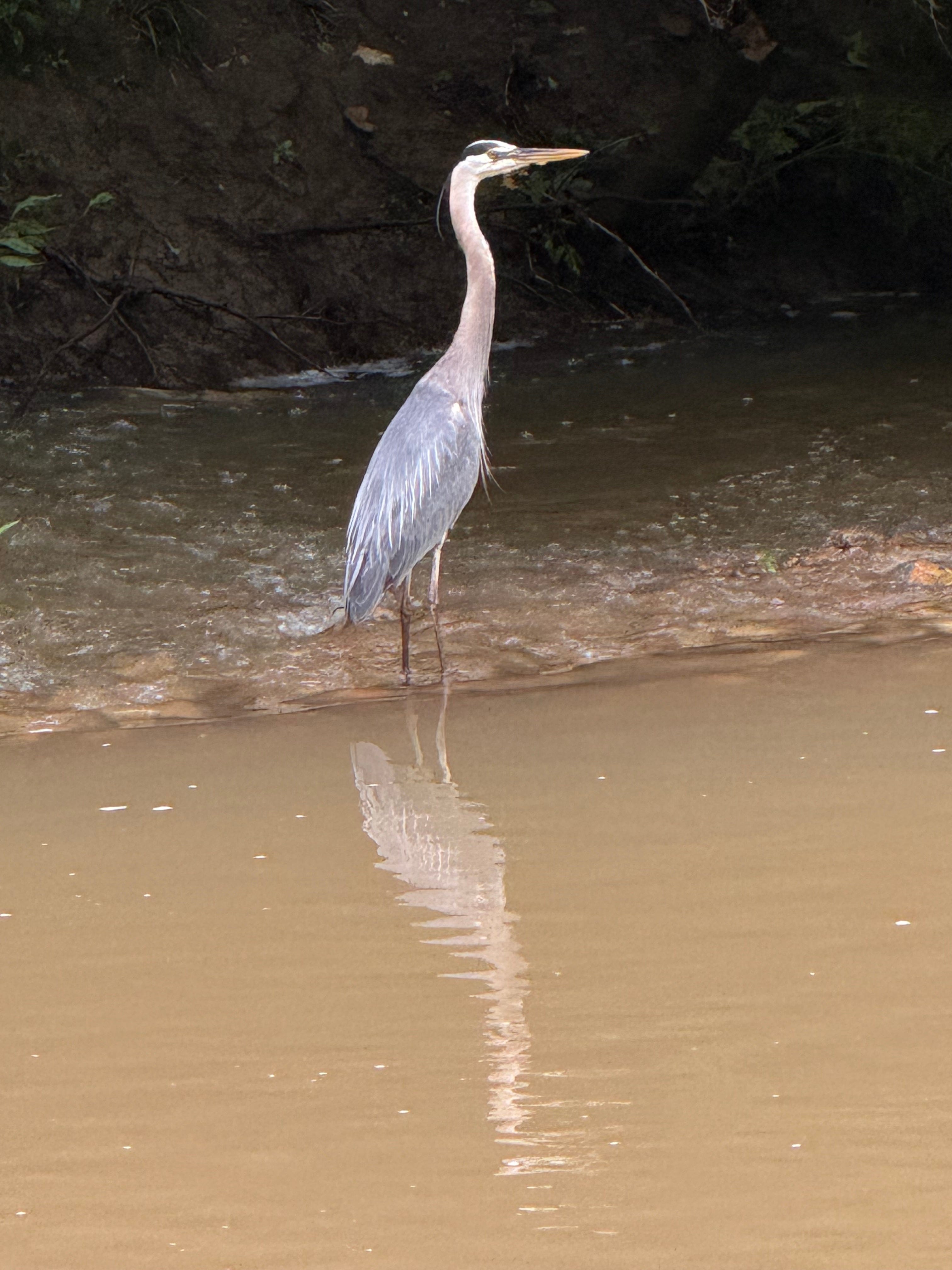
So yesterday morning I was done with a few errands by 8:00 and decided to take a solo walk along Hinkson Creek at Capen Park south of the MU campus. I had intended to walk a measured 2 miles, but the feeling of the slow pace and pleasant aloneness slowed me down to an intentional crawl. If I’d been rushed I’d have flushed the Great Blue around an early bend in the trail.
He fished the eddies in the current where aquatic insects and small fish would find refuge from the turbulence, and he would find lunch.
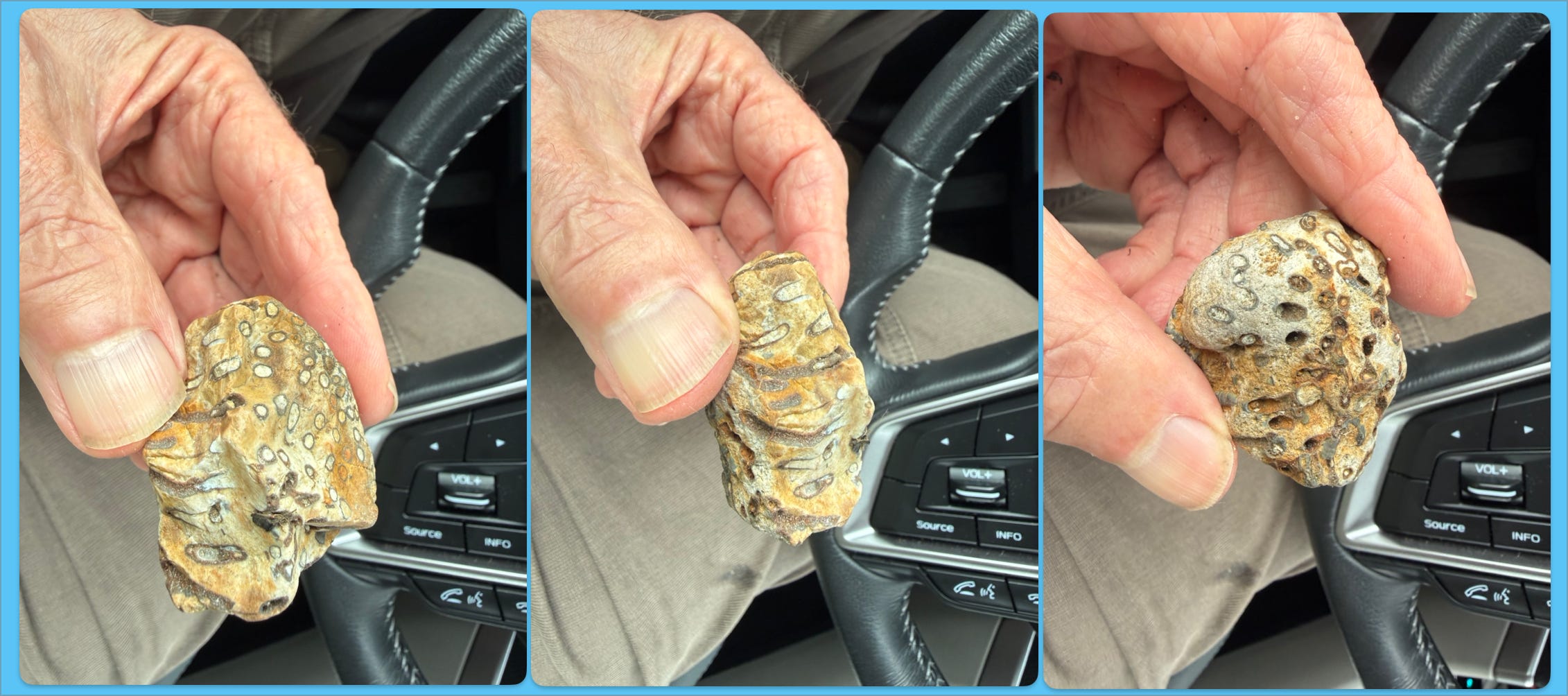
I spent more time than I’d intended searching the expansive gravel bar for collectible “rocks” to take home. I had neglected to bring a bag to put them in so just stuffed the one below in my shirt pocket.
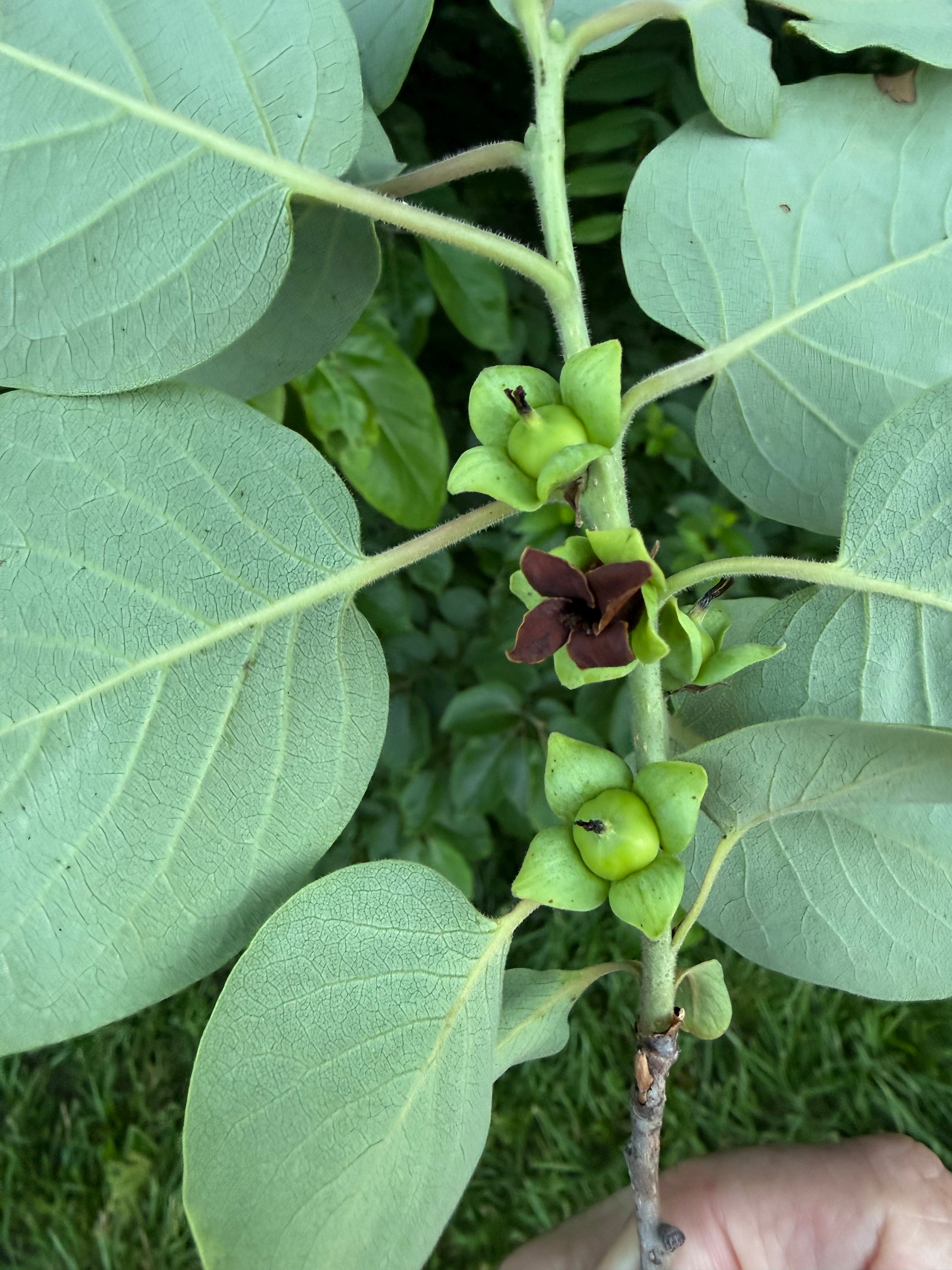
Last fall I helped an artist friend collect many dozen of the 4-pointed star shapes from the tops of fallen over-ripe persimmons. She will use them in one of her “constructions” that “paints” with three-dimensional objects from nature.
The “star” is a calyx—a whirl of sepals that subtends the superior fruit, and in the center, also the short-lived maroon petals. I have discovered a persimmon tree here that is 14 inches at the base. Might be a country record?
Not by a long shot, turns out. I had no idea they grew so large!
The Missouri state champion persimmon has been measured at 122 feet tall with a 97-inch trunk circumference and a 38-foot crown spread — and a more recent geocaching source puts it at 93 inches in circumference, 124 feet high, and 40 feet of spread, totaling 227 points on the champion scoring index. That's a DBH of roughly 29–31 inches (circumference ÷ π). This persimmon also qualifies as a national champion.
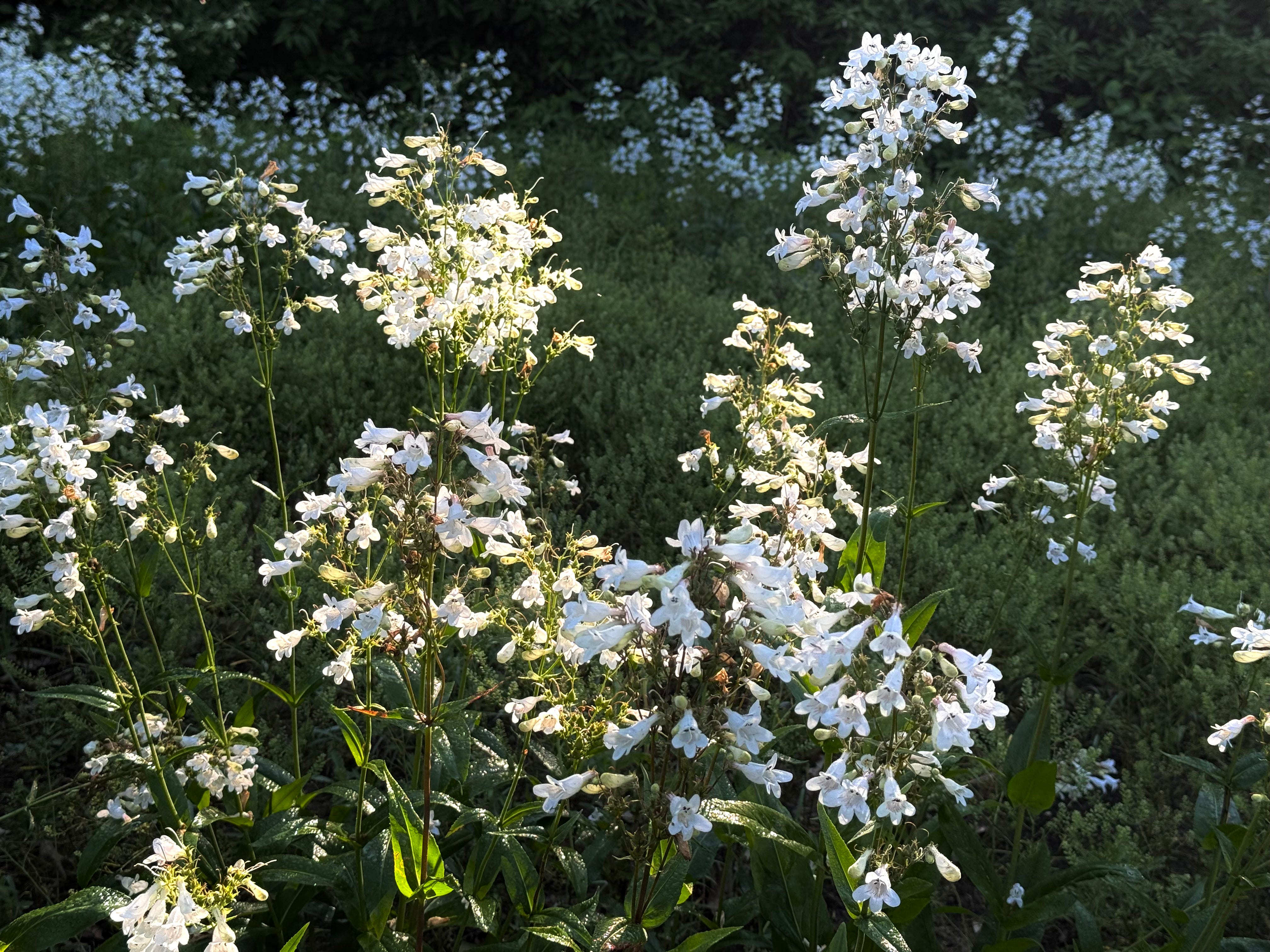
The beautiful wildflower below is Foxglove Beardtongue, Penstemon digitalis, growing in perfusion along the stream banks. It is a mid-western prairie species I had seen before—in Floyd, where our adjoining neighbors have naturalized (rather than pasture-ized) their acreage in native grasses and prairie species.
I consider such known creatures to be friends and it delights me to discover them anew every year, even in Missouri meadows.
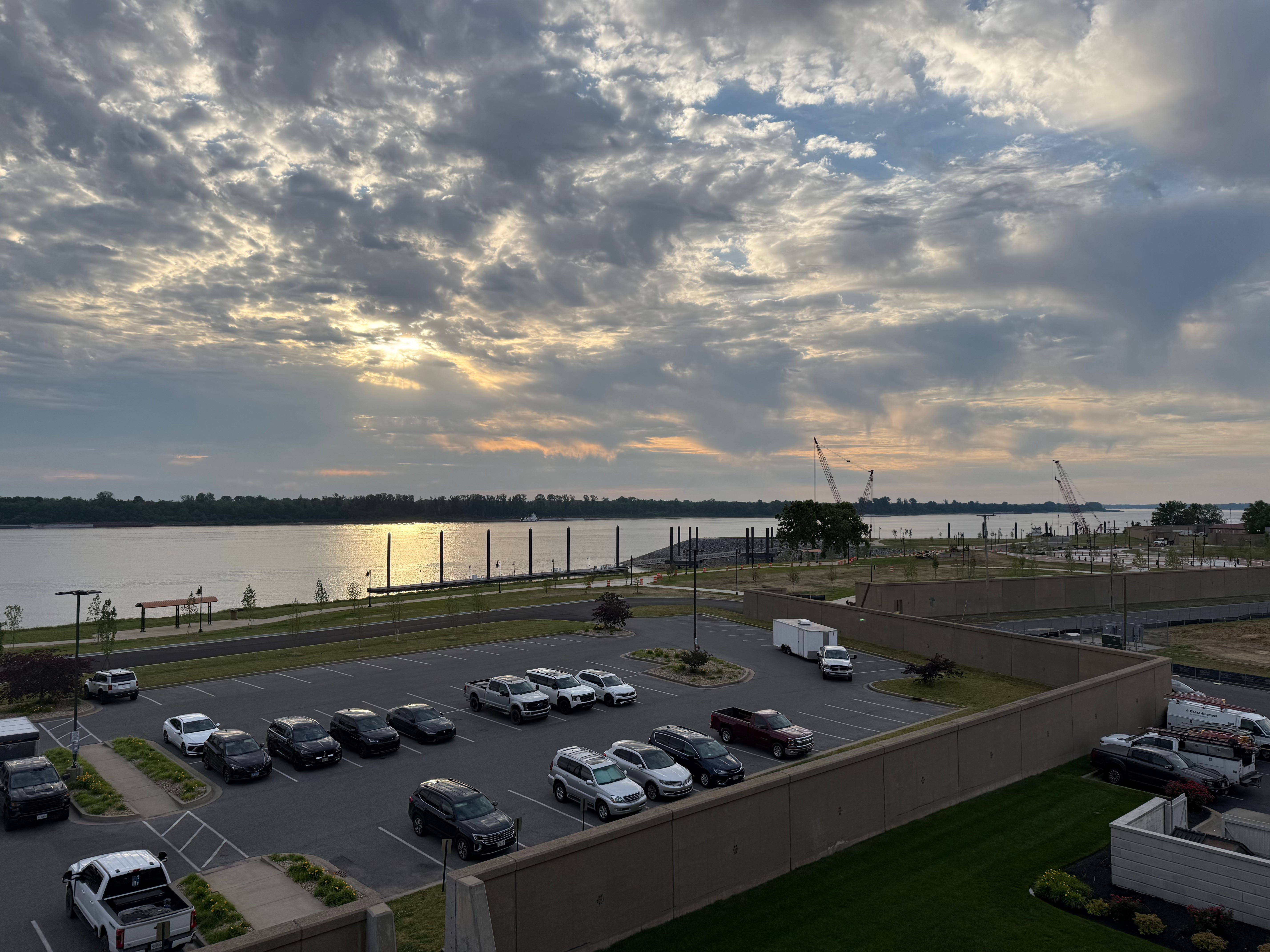
And lastly, from the recent travels back to Virginia—the final stay on the return trip was in Paducah KY. I learned that the town was devastated by a massive record-setting flood in 1937, when the town received 18 inches of rain in 16 days.
To prevent this from happening again, a 12 mile floodwall was constructed, 3 feet higher than needed to turn back a 1937 repeat. You can see it just below our 4th floor balcony at the Holiday Inn Waterfront. The Ohio river is still a working river, including commercial fisheries for catfish.
Meanwhile, I am writing lately with a bit of new energy and enthusiasm. But the topics are not sufficiently crafted in my mind or polished in my vocabulary to share. And much of it, only for my own edification and rumination: how do I know what I think until I see what I say. Right?
I hope to do a better job of sharing what’s going on in the life and times of a transplanted biology watcher, still thankful for his mobility and his senses, and in love with the planet, its creatures great and small, and some of its perplexing humans.
I regret being so distant of late, but I have just been distracted and quiet, and not down for the count!
Thanks for sharing. Great pics and good story. Enjoyable.
Fred, my Samsung cell phone has a superb camera, and the weight of the thing makes it so easy to carry. I think I will go merrily along with that for a while. Just for fun, I may investigate Lumix - wonderful lenses on them, both the Leica lenses and their own Lumix lenses. I looked at the Nikon kit, and it is (indeed) a bridge too far.